When people look at a payslip, they usually focus on three figures: gross salary, social contributions, and net pay. In most of Spain, that reading happens with the common personal income tax system in mind and with the Spanish Tax Agency as the familiar reference point. In the Basque Country, however, that reflex can lead to incomplete conclusions. Personal taxation is not administered in exactly the same way there, and that has a direct impact on payroll withholding, on how a salary simulation should be interpreted, and on how job offers should be compared.
The practical point is simple: two people with similar salaries can see different withholding percentages depending on whether they are taxed in Bizkaia, Gipuzkoa, Araba, or under the common tax regime. That does not automatically mean a payslip has been prepared incorrectly. It means the applicable framework may be different. For employees, expats, and payroll teams, the right question is not only “how much tax is being withheld?” but also “under which system is that withholding being calculated?”
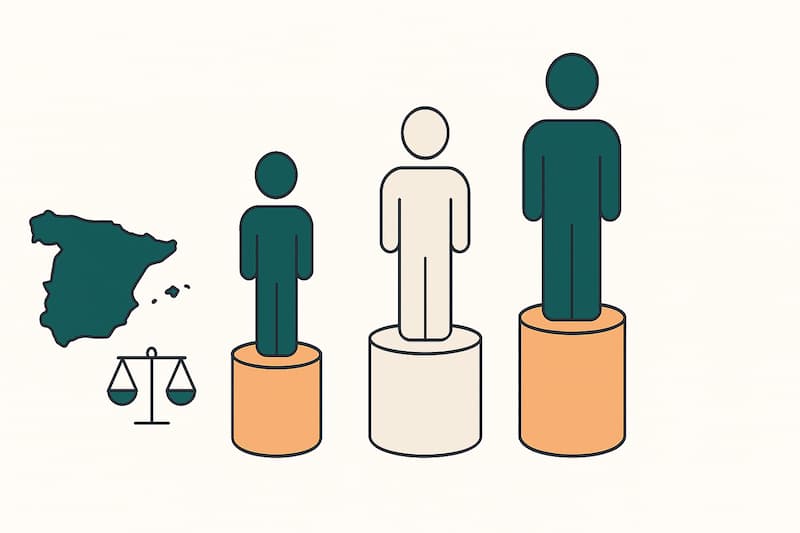
What it means to be taxed under a Foral Tax Authority in the Basque Country
Being taxed under a Foral Tax Authority means your personal income tax is not administered, calculated, and reviewed under exactly the same operating logic used in the common Spanish regime. In the Basque Country there are three Foral Tax Authorities, one for each historical territory: Bizkaia, Gipuzkoa, and Araba. Each one manages its own taxes within the framework of the Economic Agreement and approves its own Foral regulations in relevant areas, including personal income tax. In simple terms, this is not just an administrative detail. It is a distinct tax system with its own rules.
For a worker with no tax background, that can sound abstract. The most useful way to understand it is to think of the payroll withholding shown on your payslip as something that does not come from one universal table for all of Spain. It comes from a set of rules that depends on the competent territory. In the Basque Country, that territory may be Bizkaia, Gipuzkoa, or Araba, and each of them can introduce its own nuances around tax bands, personal allowances, reductions, deductions, and withholding mechanisms. That is why it is misleading to talk about “the Basque rule” as if there were one single technical sheet that applied to everyone.
The Foral system is not an anomaly but a real tax framework of its own
In day-to-day practice, many people discover the Foral system only when they compare a payslip from Bilbao with one from Madrid, or when their employer changes work location, payroll provider, or tax assignment criteria. But the Foral system is not a niche exception or an improvised arrangement. It is a long-standing historical and legal structure. The Provincial Councils and their tax authorities have powers to collect and regulate certain taxes, and that is reflected in the everyday experience of employees: forms, withholding, annual tax returns, and calculation criteria.
The official websites of Bizkaia, Gipuzkoa, and Araba show that institutional reality clearly. Each territory has its own tax section, procedures, calendar, and support resources. That matters because it explains why an employee who previously worked in common-regime territory may feel disoriented when reviewing their first Basque payslips. The concept of personal income tax does not disappear. What changes is the competent authority and, with it, the detailed rules that sit behind the payroll calculation.
What determines whether a Foral Tax Authority applies to you
From a worker’s perspective, the key point is not memorising the whole institutional architecture but identifying the practical issue: which authority is competent in your case and which criteria your employer is using to apply withholding. In many situations, tax residence, habitual residence, and the location of the employment relationship all enter the picture. For payroll teams, accurate personal data, family information provided by the employee, and proper system configuration also matter.
This also affects people who do not think of themselves as “local” to the Basque Country. An expat joining a company in Donostia-San Sebastian, a professional moving from Barcelona to Vitoria-Gasteiz, or a remote employee changing residence may all find themselves in a different scenario from the one they expected. The common mistake is to assume that all of Spain operates with the same indicative withholding logic. In reality, a Basque payslip has to be read within its own Foral context, and that context deserves a separate explanation from the one used for the common regime.
Another important nuance is that the Basque Foral system also helps prepare the ground for understanding a related but different case: Navarre. Many people lump both realities together under the broad label of “areas with special tax rules.” That is not the right approach. The Basque Country and Navarre share the idea of a differentiated system compared with the common regime, but they are not interchangeable. If you later compare an offer in Pamplona with one in Bilbao, you will need a dedicated Navarre analysis, not an automatic extrapolation from the Basque Foral tax authorities.
Why payroll withholding may not match the common regime
Payroll withholding is essentially an advance payment toward the final tax due. The employer is not predicting exactly how much tax you will owe at year-end. It is applying an estimated withholding rate based on the information available and the rules in force. In the common Spanish regime, people are often already familiar with the idea that annual salary, contract type, family situation, children, disability, maintenance payments, or variable pay all matter. In the Basque Country, those factors remain relevant, but not necessarily with the same legal development or the same numerical outcome.
That is why a quick comparison between a general salary calculator and a Foral payslip can fail even when both calculations are reasonable within their own system. The difference may come from different tax bands, personal and family allowances configured differently, territorial adjustments approved by the relevant Foral Tax Authority, or internal regularisation formulas that do not exactly mirror the common regime. The visible result is a different withholding percentage, but the real cause lies in the applicable rules, not just in the final number.
There is no single “Basque” withholding table
One of the most frequent mistakes in salary content about Spain is to write as if there were one general personal income tax system and one uniform “Basque version.” That oversimplifies the issue. Bizkaia may approve adjustments that are not identical to those in Gipuzkoa or Araba, even if the overall logic is comparable. For payroll teams, this requires discipline. It is not enough to tick a “Basque Country” box in a payroll tool. The correct Foral territory has to be assigned, and the calculation engine has to be updated with the rules that correspond to that territory.
From the employee’s point of view, this becomes visible when two colleagues with similar gross annual salaries, one in Bilbao and one in Vitoria-Gasteiz, do not have exactly the same withholding. It also appears when a national employer tries to standardise processes and uses common-regime settings for the whole workforce. In that case, the withholding may be off target, not because of bad faith, but because one tax logic has been mixed up with another.
Payroll withholding does not always predict the final tax return result
Another reason why a payslip may not match a worker’s expectations is that withholding is only an approximation. Even within the correct system, it can end up being too high or too low depending on bonuses, back pay, changes in working hours, joining or leaving partway through the year, flexible compensation, moving between territories, or family changes reported late. This also happens in the common regime, but in Foral contexts it becomes more sensitive because the person is often comparing the result with the wrong benchmark from the beginning.
Imagine a professional with a fixed salary of 42,000 euros and a target bonus of 6,000 euros who joins a company in Gipuzkoa in September. If they compare their first payslip with that of a friend earning something similar in Valencia, they may think the withholding is wrong because the percentage does not match. In reality, that difference may come from two layers at once: first, the same legal system is not being applied; second, joining midway through the tax year means the employer may be regularising withholding across fewer months of pay.
Practical example: same gross offer, different monthly net pay
Suppose there are two job offers at 45,000 euros gross per year, paid over 14 salary instalments, with no children and no other major reductions. One offer is in Madrid and the other is in Bizkaia. If a person uses a common-regime simulation for both, they will get a fairly similar “expected” net result for each destination. But if the company in Bizkaia calculates withholding under its Foral rules and the company in Madrid uses the common regime, the monthly net salary may diverge in a noticeable way. The difference does not have to be dramatic to affect how the offer is perceived. Even 60, 100, or 150 euros per month can change a salary negotiation or the way someone budgets for rent.
The useful conclusion is not that the Basque Country always means “more tax” or “less tax.” That would be far too simplistic and often wrong. The right conclusion is different: a salary comparison only works if both scenarios are calculated under comparable rules. If they are not, the decision is distorted from the start. That is the source of many misunderstandings in recruitment processes, internal mobility, and international onboarding.
What practical differences matter for employees and non-residents
For a salaried worker, the most important difference is not academic but operational: who calculates the withholding, using which data, and under which rules. If you are an employee, it affects your monthly payslip, any regularisation during the year, and your later tax filing. If you are also a foreign national, newly arrived, or moving between territories, it also matters to know who your actual tax counterpart is and which system is being used to estimate your disposable net salary.
Many payroll issues arise because workers assume there is one universal “expected” net salary for a given gross amount. There is not. Changing residence, starting work with a different subsidiary, relocating from common-regime territory, or spending part of the year abroad can materially change how your salary should be read. This affects not only individual professionals but also HR teams hiring international talent and needing to explain why a Basque payslip may differ from the simulation a candidate found online.
Local employees: territory, family situation, and changes during the year matter
An employee already living in the Basque Country should check whether the employer has registered them under the correct territorial assignment and with up-to-date family information. A child, a separation, a recognised disability, a change in working hours, or significant variable compensation can all justify a different withholding level. If the employer operates across several territories and centralises payroll, it is also worth confirming that a common-regime logic or the wrong Foral territory has not been applied by default.
This matters especially when an employee sees a withholding percentage that looks “too low” and celebrates too early. Low withholding is not always an advantage. Sometimes it just postpones the adjustment until the annual tax return. Equally, higher withholding does not automatically mean the company has calculated payroll incorrectly. It may simply be a prudent estimate given the variables of that tax year. The only serious way to assess it is to review the applicable system and the circumstances actually communicated to payroll.
Expats and newly arrived workers: it is not enough to know you are moving to Spain
For an expat, the question “how much net salary do you take home in Spain?” is too broad if the destination is in the Basque Country. Before accepting an offer, it helps to understand tax residence, cost of living, visa issues, and how the payslip fits into the territory where you will work. If you are preparing a move, this guide on moving to Spain: tax, visas, and cost of living can help with the broader context, but in the Basque case you need to add an extra layer: the possible application of a Foral Tax Authority instead of the standard framework that many articles describe as simply “Spain.”
That nuance is especially important for international profiles negotiating packages with housing support, sign-on bonuses, school allowances, or flexible compensation. A package may look better in gross terms and still require a more careful reading of monthly net pay and annual tax exposure. If the candidate is coming from abroad, the employer should explain clearly that the internal calculation follows a Foral logic and should therefore not be compared casually with generic Spanish tax simulators.
Non-residents, relocations, and split tax years
The most sensitive cases tend to appear when the person does not fit neatly into one tax-year picture: they arrive in Spain halfway through the year, spend part of their time abroad, change residence during the year, or have more than one payer. In those situations, the issue is not only how much to withhold, but also how the personal circumstances fit into the relevant tax regime and territorial management. This is where payroll and tax advice need to coordinate more closely, because a payslip that is correct from an employment perspective may still need review from the employee’s personal tax perspective.
For the worker, the practical lesson is straightforward: if you are a non-resident, newly relocated, or internationally mobile, do not treat a standard payslip as the only proof that everything is fine. Ask for the underlying criteria, the territory considered, and whether the employer expects future regularisations. In the Basque Country, that conversation is often more valuable than a superficial comparison of percentages.
How to read net salary comparisons without mixing different systems
The biggest trap in online salary content is not always a poorly tuned number. It is often a comparison built on mismatched assumptions. If you compare net salaries without separating the common regime, the Foral Tax Authorities, and personal circumstances, you can draw the wrong conclusions about which city pays better, which offer is more attractive, or what salary level is genuinely competitive. In payroll terms, mixing systems is like comparing spreadsheets built on different assumptions: the output looks precise, but the base is contaminated.
The right way to read a net salary comparison is to ask first which calculator or methodology sits behind it. If you are using a simplified national tool, you should interpret it as a broad reference for Spain in general, not as an exact reproduction of Bizkaia, Gipuzkoa, or Araba. That does not make the tool useless. It simply defines its limits. In fact, a related calculator can still work well as a first orientation, as long as you remember that the Basque Country needs a separate reading and that the result does not fully reproduce the Foral Tax Authorities.
Important estimate disclaimer: the site’s general calculator uses a simplified national approach. It is useful for orientation, but it does not reproduce the specific rules, tables, and nuances of the Foral Tax Authorities of Bizkaia, Gipuzkoa, and Araba. If your employment is taxed in the Basque Country, use the simulation as a starting point, not as a final validation of your payslip.
First compare comparable gross pay, then compare contextualised net pay
A sensible method for assessing a job offer is to start with total gross annual pay, the salary instalment structure, the variable component, and any additional benefits. Only then should you move on to net pay. If you reverse that order, you risk turning a tax-system difference into what looks like a difference in the value of the role. Put simply: gross pay helps you compare the package; net pay helps you plan your real monthly liquidity. Both matter, but they do not serve the same purpose.
For example, if you want to understand whether 38,000, 45,000, or 55,000 euros is competitive in the Spanish market, it may help to read a broader benchmark on average salary in Spain and what counts as a good salary. That kind of content helps frame market expectations, living standards, and the relative position of a salary. If you are evaluating a specific income level, a more focused reference such as related calculator can also be useful. What you should not do is treat those guides as if they could, on their own, determine the exact net pay of a Basque Foral payslip, because a different tax framework comes into play there.
A useful comparison example for a real decision
Imagine someone receives two offers. The first is 48,000 euros in Barcelona with a 10% bonus. The second is 47,000 euros in Bilbao with a 12% bonus and two remote-work days per week. If they only look at a simplified national simulation, they may conclude that Barcelona leaves a better net salary or that the gap is negligible. But that reading would be incomplete. To decide properly, they should review at least five layers: fixed gross salary, likely variable pay, pay schedule, local cost of living, and the applicable withholding system.
Suppose the Bilbao employer also applies a Foral withholding logic that differs somewhat from what the person expected when using a state-wide benchmark. That discrepancy does not mean the offer is automatically worse. It means the comparison needs to be corrected. The monthly net may be somewhat different, but the bonus may be easier to achieve, rent levels may alter the overall picture, and the employer may cover more mobility costs. A good decision comes from a clean comparison, not from mixing tools designed for different tax systems.
Signs that a salary comparison is built incorrectly
There are several warning signs that are easy to spot. The first is when an article or calculator talks about “Spain” as if it were fully uniform without mentioning either the Basque Country or Navarre. The second is when it uses fixed income tax percentages as if they applied to every person with the same gross salary. The third is when it ignores territory, family circumstances, or the date someone starts work. When those omissions appear, the safest approach is to treat the result as editorial guidance rather than as a payroll-grade calculation.
A fourth warning sign is very common in salary negotiations: someone compares their future Basque payslip with a friend’s current payslip in another autonomous community and assumes the difference proves the company made a mistake. That inference is weak. There may well be an error, but there may also be two different tax systems, two different family configurations, and two completely different moments in the tax year. The comparison only has value if the calculation bases are truly equivalent.
When it makes sense to request a payroll or withholding review
Requesting a review does not mean accusing the employer of doing payroll badly. It means identifying that there is a relevant gap between your expectation and the calculation applied, and that the gap may be explained or corrected with proper data. In the Basque Country, that review is especially reasonable when the employee has arrived from the common regime, when the company outsources payroll to a national provider, or when personal changes have not been reflected on time.
The best review requests are specific. It is not enough to say, “too much tax is being withheld.” It is better to ask verifiable questions: which Foral territory has been applied, which family situation is recorded in the payroll system, whether the calculation includes estimated variable pay, whether there was a regularisation because of a mid-year start, and whether there is an expected adjustment in future payslips. The clearer the question, the easier it is for payroll to respond with real substance instead of a generic explanation.
Cases where an immediate review is worthwhile
Several common situations stand out. One is a recent start date with a withholding rate that looks surprisingly high or low compared with what was discussed verbally. Another is a change of residence or work centre between territories. It also makes sense to review payroll after bonuses, stock compensation, back pay, irregular extra payments, or a meaningful salary update. And if the company showed you a pre-contract simulation based on a general calculator and the real payslip is materially different, it is reasonable to ask for the calculation trail.
In international teams, another common trigger is confusion between resident and non-resident status, or between payroll treatment and the employee’s final personal tax position. A fast onboarding process can leave important data incomplete, and incomplete data leads to imperfect withholding. An early review reduces unpleasant surprises at tax-return time and helps avoid months of budgeting around a misleading net figure.
What documentation helps make the review useful
If you want the review to be effective, gather concrete information: your contract, agreed annual gross salary, pay structure, expected bonus, start date, actual residence, family changes, and, if one exists, the simulation shown to you before signing. For payroll teams, it also helps to know whether you had another payer in the same tax year or whether you recently reported a personal change. The more accurate information enters the system, the better the withholding can be adjusted.
From an internal communication perspective, a neutral wording often works best: “I would like to confirm that my payslip has been calculated using the correct territory and personal data, because I previously worked under the common regime and the percentage differs from my earlier reference point.” That approach makes a technical answer easier. If the employer operates across Bizkaia, Gipuzkoa, and Araba, you can also ask them explicitly which territorial rules they used as the basis.
The final practical takeaway
If you are an employee, the most useful rule is this: do not treat a net-pay difference as conclusive until you know whether you are comparing equivalent systems. If you are an expat or considering a relocation, do not accept a salary simulation without asking whether the role is taxed in Foral territory. And if you work in payroll, avoid relying on common-regime mental shortcuts when the employee belongs in the Basque Country. Precision here is not a luxury. It is part of reliable salary administration.
In short, a Basque payslip may be calculated differently because it does not necessarily depend on the same framework as the rest of Spain under the common regime. That difference should neither be dramatised nor brushed aside. It should be understood. Once you understand that there are three Foral Tax Authorities, that there is no single “Basque rule,” and that a simplified national calculator does not reproduce that level of detail, you are in a much better position to make decisions about job offers, relocations, withholding reviews, and payroll conversations. The practical next step is clear: identify your territory, validate your data, and only request a review once the comparison itself has been built on the right basis.