Navarra creates a lot of confusion for workers, expats, and payroll teams because it is part of Spain, uses familiar employment concepts, and shares much of the general labor framework, but it does not apply personal income tax in exactly the same way as the common regime. That mix of familiarity and difference leads to very common mistakes: comparing a Navarra net salary with a state-wide simulation, assuming the “correct” withholding should look similar to Madrid or Barcelona, or thinking a company has configured payroll incorrectly when it is actually applying foral rules.
The practical point is not to memorize tax doctrine. It is to understand what really changes for your take-home pay and for your decisions. If you are about to sign an offer, renegotiate salary, review a raise, accept a relocation package, or simply check why your net pay came out differently than expected, you need local context. Navarra is not the Basque Country, even though both are foral territories, and it should not be read through common-regime tables as if they were interchangeable.
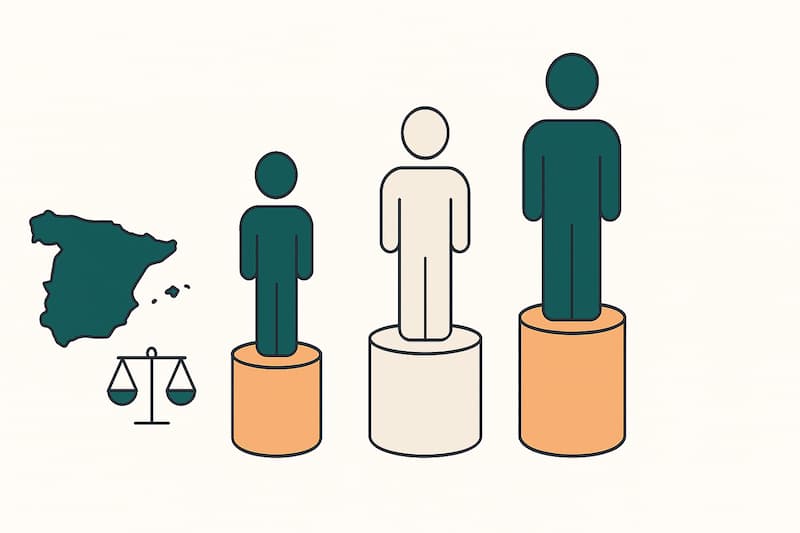
What defines the Hacienda Foral of Navarra
The first important idea is that Navarra has its own Hacienda Foral, with rule-making and collection powers in its territory within the framework of the Economic Agreement with the Spanish state. In practical terms, that means certain direct taxes, especially personal income tax, which is what salaried workers notice most clearly on their payslip, are not managed in exactly the same way as in the common regime. The consequence for employees is immediate: two people with a similar salary profile can see different withholding, tax prepayments, and even different refund expectations depending on whether they are taxed in Navarra or outside Navarra.
It is also useful to understand what this does not mean. It does not mean Navarra is “outside” the Spanish system, that any figure is possible, or that someone can freely choose between two tax frameworks every month depending on convenience. Navarra’s foral regime works with its own rules, but those rules are coordinated with the state. That is why a general Spain-wide calculator may still be useful as a very rough guide to understand gross salary, social contributions, and net pay, but it is not a reliable final simulation if your employment relationship and tax treatment fall under Navarra. That is exactly why the related calculator should be used carefully when your case is in Navarra.
Important notice: the general Spain salary calculator does not model Navarra’s tax system and should not be used as a final reference for withholding or net pay in Navarra. It can help you understand the overall structure of a payslip, but it does not replace a Navarra-specific simulation.
This foral singularity makes Navarra a separate case within Spain’s employment map. From an SEO and search-intent perspective, many users arrive asking why “my payslip in Navarra does not match Spain,” when the real answer is that they are mixing different frameworks. From an editorial perspective, the sister article about the Basque Country serves a similar purpose, but the two should not be blended as if they were the same system. They share the foral concept, yes, but each territory has its own administration, its own rules, and its own operating logic. If you mix them together, you end up with imprecise comparisons exactly when you need precision most: when you are about to sign, relocate, or challenge a payroll result.
Another practical characteristic of Navarra’s Hacienda Foral is that its documentation, tables, and official tools are designed for Navarra taxpayers and Navarra payers. That changes the reference point. Under the common regime, many people assume that Spain’s national tax agency is the default source for checking personal withholding. In Navarra, the primary reference should be the Hacienda Foral when you are dealing with Navarra personal income tax and the specific mechanics affecting your payslip. For an ordinary worker this is not just a legal curiosity. It is the difference between checking the right source and wasting time arguing with HR about a table that does not even apply.
What usually confuses employees
The confusion starts because the payslip still looks “Spanish” in its general format. You see base salary, supplements, social contributions, earnings, and an income tax withholding line. At first glance, everything looks like the same system. However, that withholding line does not necessarily come from the same references you would use for a contract in common-regime territory. That is why someone who opens a corporate spreadsheet, a national simulator, or a generic salary guide often gets a figure that does not line up with what appears in Navarra.
For employees, the best way to understand it is this: Navarra does not just change “how much you pay” in the abstract. It changes how the amount withheld during the year is estimated. And because withholding is what people notice most month by month, the difference is usually felt first in monthly net pay, not in a theoretical explanation about Spain’s territorial tax model.
Why it matters before signing an offer
When a company presents an offer, it almost always talks in gross annual terms. But candidates usually think in terms of monthly net pay, rent, everyday expenses, and cost of living. In Navarra, that jump from gross to net requires more care than in a purely state-wide comparison. If you treat a common-regime table as valid, you can overestimate or underestimate the amount that will actually land in your bank account, and that affects very concrete decisions such as accepting a rent level, giving up an allowance, or asking for a salary review before joining.
Navarra also attracts both local professionals and people moving from other Spanish regions or from abroad. For the latter, the word “foral” often sounds abstract until an unexpected withholding appears on the first payslip. Understanding from the start that Navarra operates through its own tax channel avoids unnecessary conflict with the employer and helps you ask better questions early: which tax residence assumptions are being applied, which withholding has been configured, and whether the simulation provided by payroll was built using Navarra references.
Why payslips and withholding can look different
The most visible reason a Navarra payslip may surprise you is that income tax withholding does not have to match the amount that would come out of a common-regime table for the same gross salary. Employees usually notice the symptom first and then look for the cause: “they are withholding more than I expected,” “they are withholding less than in my previous job outside Navarra,” or “my coworker with a similar salary in another region takes home a different amount.” In many cases, the explanation is simply that different tax administrations are being compared.
That difference becomes even more obvious when personal and pay-related circumstances affect the withholding rate: family situation, number of salary payments, variable compensation, bonuses, flexible compensation, joining mid-year, or adjustments through regularization. Because the calculation happens inside a foral framework, the correct reading is not “Navarra withholds in a strange way,” but “Navarra withholds according to its own rules.” If you have been relying on general references about whether a salary is high or low in Spain, such as our guide to the average salary in Spain and what counts as a good salary, keep in mind that those articles help provide economic context, but they do not replace a local Navarra withholding calculation.
It also matters that people often talk about “net pay” as if it were a universal number. It is not. The annual gross salary can be identical in two offers and the monthly take-home amount can still differ during the year because of the withholding applied, the number of salary payments, or the way the employer regularizes withholding when circumstances change. That does not necessarily mean one employer pays better than the other. Sometimes it simply means they are prepaying the tax differently, and the monthly snapshot does not tell the whole story.
In Navarra, as in any territory, higher withholding does not automatically mean a higher final tax bill, and lower withholding does not always mean you achieved a better outcome. It may simply reflect a different schedule of tax prepayments. That is why it helps to separate three ideas that are often mixed together: the total employment cost, the final annual tax outcome, and the monthly withholding shown on the payslip. A common mistake is to compare only the third item and draw conclusions about the other two.
What can change within the same company
Even without moving, you may notice changes if your employer adjusts withholding because your salary changes, you joined halfway through the tax year, you receive an unexpected bonus, or you update your personal details. When that happens in Navarra, employees often look for answers in general forums or state-wide calculators and end up even more confused. The regularization may be perfectly correct while still looking different from what you expected if you had common-regime references in mind.
This happens frequently with bonuses, targets, and extra salary payments. If annual gross pay changes during the year, payroll has to recalculate withholding. That can already be confusing in common-regime territory. In Navarra, if you are also carrying an expectation built on state-wide tables, the difference looks even bigger. The best practice is to review the logic of your full tax year, not only the income tax line from one isolated month.
Realistic example: comparing an offer with the first payslip
Imagine a marketing professional earning EUR 42,000 gross who receives two similar offers: one in Zaragoza and one in Pamplona. The Navarra offer includes the same fixed gross salary, fourteen salary payments, and a small performance bonus. She checks a general Spain salary simulation and expects an approximate monthly net amount that she uses for rent calculations. However, when she receives her first payslip in Navarra, the withholding is higher than she projected, and she concludes the company has made a mistake.
What has probably happened is not that the gross offer is worse or that payroll improvised. It is that the initial estimate was built with a tool that was not adapted to Navarra’s system. If the employer has also chosen to apply a cautious withholding from the first month because of the expected bonus or because of the joining date, the visible gap becomes even larger. The smart move is not to argue by comparing a state-wide table to a Navarra payslip. It is to ask for the full Navarra simulation, review the number of payments, confirm the family details used, and understand whether a later regularization is expected. That conversation changes the analysis completely.
Why an unexpected net amount is not always an error
Many users panic when the net amount “looks worse” than expected, but an unexpected net figure may have completely normal explanations: withholding adjusted to the Navarra framework, cautious payroll settings, a difference between twelve and fourteen salary payments, or a provisional calculation that will later be regularized. Before assuming there is a payroll issue, it is worth checking whether the original frame of reference was correct.
The useful question to ask payroll is not “why does this not match the Spain calculator?” but “which Navarra rules were used to calculate this withholding, and which salary assumptions are being applied for the rest of the year?” That wording usually gets you a much more useful answer and avoids a pointless debate between a calculator that does not apply and a payslip that does.
Which practical differences matter when comparing offers or relocations
When you compare a job offer in Navarra with one in common-regime territory, what matters is not an institutional debate but the practical impact. You need to know how much money you will actually receive each month, whether net pay will be stable, how variable pay and extra payments will be treated, which documents you need for a serious simulation, and how much room you have to renegotiate the package if the expected net amount changes. In a work-related move, the most expensive mistake is rarely failing to understand the theory behind the Economic Agreement. It is building your personal budget on a badly estimated net figure.
That is why, if you are evaluating a move, rent, school costs, car expenses, or a family visa plan, it helps to place Navarra net pay inside a broader relocation analysis. A guide on moving to Spain, taxes, visas, and cost of living can help you structure the major decision areas, but in Navarra you need to add a local salary layer to that comparison. The missing data point is almost never “what Spain costs” in the abstract. It is how your real cash flow changes under Navarra rules.
One important practical difference is that gross salary does not tell the whole story when you compare regions. Two employers may both offer EUR 50,000, but if one provides a properly adjusted local simulation and the other gives you an indicative net amount based on common-regime logic, the second may look more attractive only because the estimate is more optimistic. That distorts the negotiation. If the package includes bonus, car, health insurance, meal vouchers, stock, or flexible compensation, the need for a local reading becomes even stronger.
It also matters where you are effectively resident and when the move happens. Joining in January is not the same as joining in September. Spending the full tax year in Navarra is not the same as moving there mid-year. A local hire is not the same as a poorly explained internal transfer. In domestic or international mobility, a responsible employer should distinguish between the gross offer, the payroll treatment, and the expected tax outcome. If they do not, the candidate should ask for that separation before accepting.
What you should ask for in writing
If you want to compare a Navarra offer with one outside Navarra, ask for at least the following in writing: annual gross salary, number of salary payments, expected variable compensation, benefits in kind, withholding assumptions, start date, and confirmation that the simulation was built using Navarra rules. You do not need to turn the negotiation into an audit, but you do need to remove ambiguity. A difference of only a few withholding points can represent hundreds of euros over the year, and that matters when you are calculating housing costs or savings targets.
- Fixed gross pay and variable pay shown separately, not merged into one marketing number.
- Number of salary payments and payment schedule.
- Withholding assumptions used by payroll.
- How bonus, signing bonus, or guaranteed variable pay will be treated.
- A local simulation if the contract and tax treatment fall under Navarra.
This level of detail is especially valuable for expats and highly mobile professionals because they often arrive with international salary references or cost-of-living spreadsheets that are already approximate by nature. If they also add a Spain net estimate built from the wrong framework, the chance of making a bad decision increases sharply. Navarra does not require you to make the decision more complicated than it needs to be, but it does require a more precise method.
Illustrative comparison: two ways of reading the same gross salary
| Item | Rushed reading | Correct reading for a Navarra offer |
|---|---|---|
| Annual gross salary | “With this gross salary I will receive what the general calculator shows” | Gross salary is only the starting point; withholding must be reviewed under Navarra rules |
| Monthly net pay | Assumed to stay stable all year | May vary because of salary payments, bonus, and regularizations |
| Initial withholding | If it looks different, there must be an error | It may be fully correct within the foral system |
| Comparison with another region | Done using a generic state-wide table | Should be done using homogeneous simulations and equivalent assumptions |
| Relocation decision | Based on a quick net estimate | Based on local net pay, cost of living, and proper tax documentation |
The table summarizes a very common problem: the offer is not necessarily wrong, the comparison method is. When the method is flawed, candidates think Navarra “pays less” or “withholds too much” without ever checking the number against a calculation that actually applies. That can lead people to reject a good offer, accept a bad one, or negotiate around the wrong figure.
How to avoid comparing Navarra net pay with common-regime tables without context
The safest way to avoid mistakes is to treat Navarra as a separate case from the start. If your employment, tax residence, or payroll belongs to Navarra, stop using general common-regime tables as your decisive reference. You can still consult them to understand basic concepts, but not to close a salary decision. The correct comparison is not “my Navarra net pay versus any random Spain table.” It is “my Navarra net pay versus another simulation built with equivalent assumptions and the applicable territorial rules.”
This sounds obvious when stated plainly, but in practice many people compare badly. It happens with candidates, employees moving between regions, internationally mobile workers, and sometimes even managers negotiating packages from outside Navarra. The problem is that the mind latches onto one simple number. If someone read a guide about how much net pay a certain salary leaves in Spain and then sees a different Navarra withholding result, they interpret the gap as an anomaly. In reality, it is often just a poor comparison at the starting point.
A useful discipline is to standardize five variables before comparing net figures: same gross pay, same number of salary payments, same point in the year, same personal situation, and the same territorial framework. If only one of those elements changes, the comparison becomes weaker. If several change at once, the result stops being useful. Navarra demands exactly that kind of order: put every figure back into context before drawing conclusions about whether an offer is worthwhile.
It also helps to remember that monthly net pay is only a partial snapshot. For some people, the key number is the expected annual tax burden. For others, it is monthly cash flow. For others, it is the combination of both. In Navarra, as in any territory, you can have a tighter monthly net figure because payroll is using prudent withholding and still avoid an unpleasant adjustment later. Or the opposite can happen: you may enjoy lower withholding at the start and later discover that the forecast was too optimistic. Without context, comparing only one month’s take-home pay can lead to poor conclusions.
Short method to compare properly
If you need a quick rule, use this sequence. First, ask for a Navarra-specific simulation if the case is in Navarra. Second, confirm that the employer used your real data and not a generic profile with no personal circumstances. Third, check whether variable pay is included and how it will be regularized. Fourth, compare it against another simulation built with exactly the same pay structure. Fifth, decide using both monthly net pay and the expected annual tax result.
This method is slower than opening a generic calculator, but it saves you from expensive mistakes. It also reduces the frustration of thinking “something is wrong in Navarra” when what was wrong was the starting tool. In practice, the good comparison is boring, methodical, and unspectacular. That is precisely why it works better.
Most common interpretation mistakes
- Using a national simulation as the final number for a Navarra payslip.
- Comparing a net amount paid over twelve salary payments with one paid over fourteen.
- Forgetting bonuses, variable pay, or mid-year start dates.
- Confusing monthly withholding with the final annual tax bill.
- Assuming Navarra and the Basque Country work the same way just because both are foral territories.
- Concluding that different withholding automatically means a payroll error.
Avoiding these mistakes makes offer analysis much better. More importantly, it gives you stronger arguments when you speak to HR or an advisor. You do not need to master every technical rule to spot a bad comparison. You just need to know which variables must be aligned and accept that Navarra deserves its own treatment.
When it makes sense to review local documentation or use specialist payroll support
There are situations where general guidance is no longer enough and where it makes sense to move to local documentation or specialist payroll advice. The first one is simple: when the gap between your expectation and your payslip has a real impact on your financial decision. If that unexpected withholding changes your housing budget, your saving capacity, or how you evaluate a job offer, you should not stop at an informal explanation. That is the point where you should review Navarra references, ask for a detailed simulation, and confirm that the employer is applying the right framework.
It also makes sense to escalate when mobility, meaningful variable pay, or non-standard personal circumstances are involved. Joining in the middle of the tax year, moving from another Spanish region, receiving a large bonus, using complex flexible compensation, going through a family change, or arriving from an international background are all situations where intuition often fails. In those cases, the generic answer “Navarra works differently” is not enough. You need to know exactly how your withholding has been built and what may happen over the following months.
For a worker or expat, the clearest warning sign is this: if you are about to make a decision worth thousands of euros based on a net salary simulation and you do not know where that simulation came from, you still do not have enough information. The sensible move is to ask for the underlying assumptions and, if the employer cannot provide a reliable local breakdown internally, to use an advisor or payroll professional with Navarra experience. That is not overreacting. It is closing an important decision with the level of precision it deserves.
Reviewing local documentation is also advisable when the employer operates across multiple regions and you suspect it has reused common-regime templates or calculations. This happens more often than many people think in organizations that centralize compensation outside Navarra. It is not always bad practice; sometimes it is simply a lack of local sensitivity. But for the employee, the outcome is the same: a rough salary figure that has been poorly contextualized and that can create distrust from day one.
Documents and questions that help before accepting or challenging a payslip
Before accepting an offer or mentally disputing your first payslip, gather the following: the draft offer, the pay structure, the number of salary payments, the joining date, the family details communicated to the employer, and the withholding simulation used by payroll. With those documents in front of you, the conversation becomes much better.
- Ask whether the withholding was calculated using Navarra references rather than a general state-wide table.
- Ask whether variable pay is included in the annual forecast.
- Ask whether a later regularization is expected and when it is usually done.
- Ask whether the simulation assumes twelve or fourteen salary payments.
- Ask which local documents should be reviewed if you are arriving from another region or from abroad.
If the answers are vague, that is the point where it is worth relying on official Navarra documentation or on a professional used to handling Navarra payroll. In practice, this step often saves misunderstandings and prevents you from judging an offer based only on a first impression of the net amount. Navarra does not require tax drama, but it does require the same rigor you would apply to any other major element of salary negotiation.
The practical takeaway you should keep
If you work in Navarra or are about to work there, do not measure your offer only through the mirror of the common regime. Use that broader framework for orientation, but make the final decision using a Navarra simulation, your real data, and a full reading of salary payments, variable compensation, and regularizations. That change in approach resolves most of the confusion around unexpected withholding and prevents you from reading a system difference as if it were an error.
The useful conclusion is simple: if your Navarra payslip does not look like the state-wide table you checked before, your first step should not be to assume something is wrong. Your first step should be to verify the context. When the amount of that difference affects a relocation, a contract signature, or a salary renegotiation, it is worth reviewing local documentation or using specialist payroll support before deciding. In Navarra, comparing well matters more than comparing fast.